Customization
The B2B Guide to Sunglasses Hinge Types for OEM and ODM Manufacturing
Hinge choice affects fit, folding, durability, serviceability, and the way a custom sunglasses frame must be engineered. This B2B guide compares common hinge families and gives buyers a practical framework for material compatibility, sample approval, supplier questions, and production inspection.Why hinges deserve procurement attention
The hinge is where mechanical stress, user handling, and cosmetic expectations meet. Loose temples, uneven folding, screws backing out, damage around the hinge anchor, and finish wear can all trace back to the way the complete hinge-and-frame system was selected and assembled.
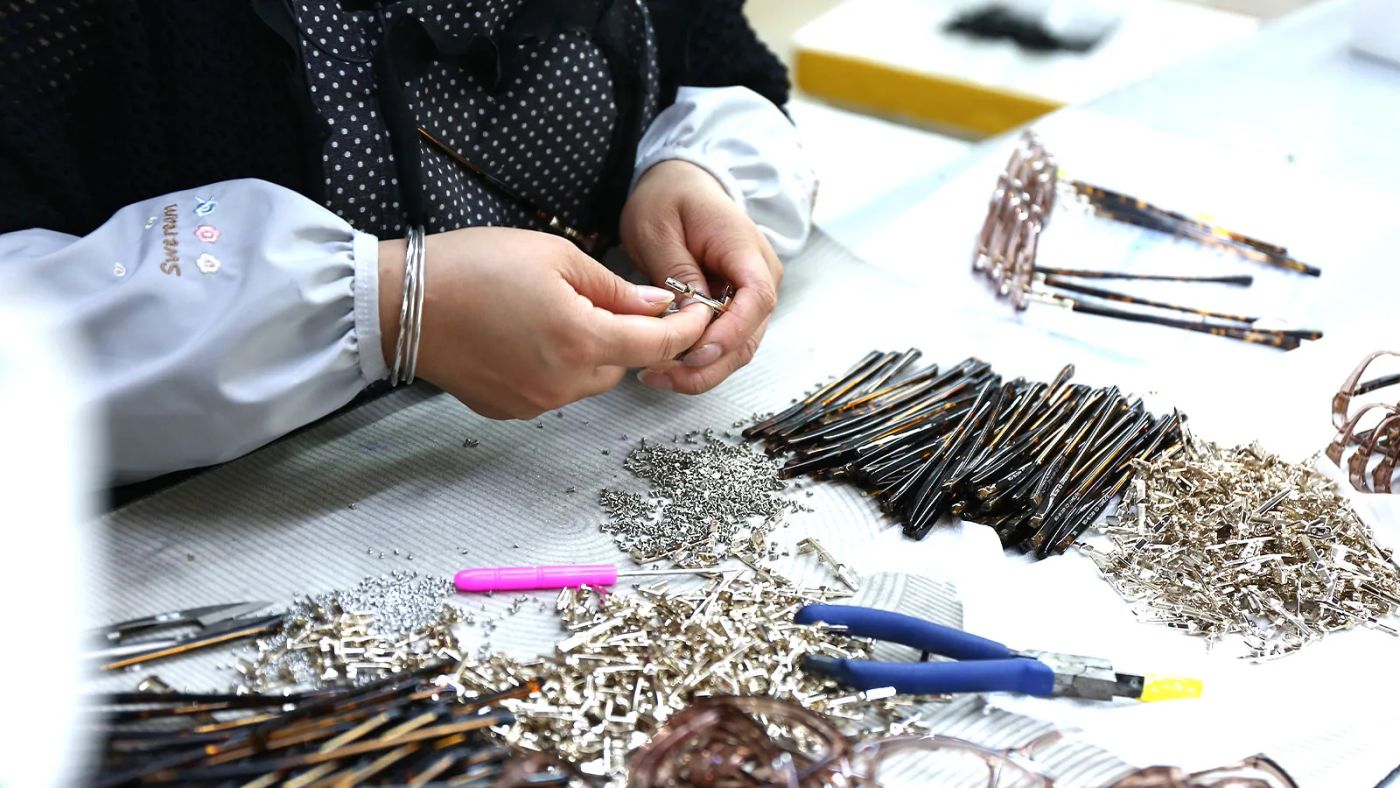
For sourcing teams, choosing a hinge is not a matter of picking a name from a catalog. The decision must account for front material, temple geometry, reinforcement, decorative treatment, target use, serviceability, and the inspection method the supplier can apply.
This guide explains the main hinge families, how they interact with common frame materials, which questions to ask during development, and what to verify before mass production.
Main hinge families
The hinge families below are widely used across acetate, injection-molded, and metal sunglasses. Names vary by region and supplier.
Standard barrel hinge (non-spring). A fixed hinge with interlocking barrels and a screw. Simple, serviceable, and the default for many acetate and metal frames. It offers a defined opening angle with no flex. Fit tolerance is entirely defined by the frame geometry, since the hinge itself does not compensate for head width variation.
Spring hinge. A hinge with an internal spring mechanism that allows the temple to flex outward beyond the rest position and return. It can improve perceived fit across a wider range of head sizes and reduce stress on the frame during on/off handling. Spring hinges are more complex, contain more parts, and introduce additional failure modes such as spring fatigue, cassette contamination, and internal wear.
Flex hinge (non-spring elastic). A category that uses elastic elements or geometry rather than a coiled spring cassette. Behavior varies by design. Buyers should not assume equivalence between two suppliers' "flex" hinges without inspecting samples.
Riveted hinge. The hinge leaf is riveted into the frame front or temple, common in acetate constructions. Riveting is cosmetic as well as structural on some designs. Rivet pull-out and cracking around the rivet are known failure modes if the acetate is thin or under-cured.
Molded-in or integrated hinge. The hinge or its anchor is embedded during injection molding of polymer frames. This eliminates a secondary assembly step but ties hinge choice tightly to the mold. Changes late in development can require tooling modifications. See custom sunglasses mold development for how hinge geometry interacts with tool design.
Screwless hinges. Various proprietary designs replace the screw with a snap, cam, or interference fit. They can simplify assembly and reduce loose-screw complaints, but serviceability in the field is often limited, and replacement parts may not be available outside the original factory.
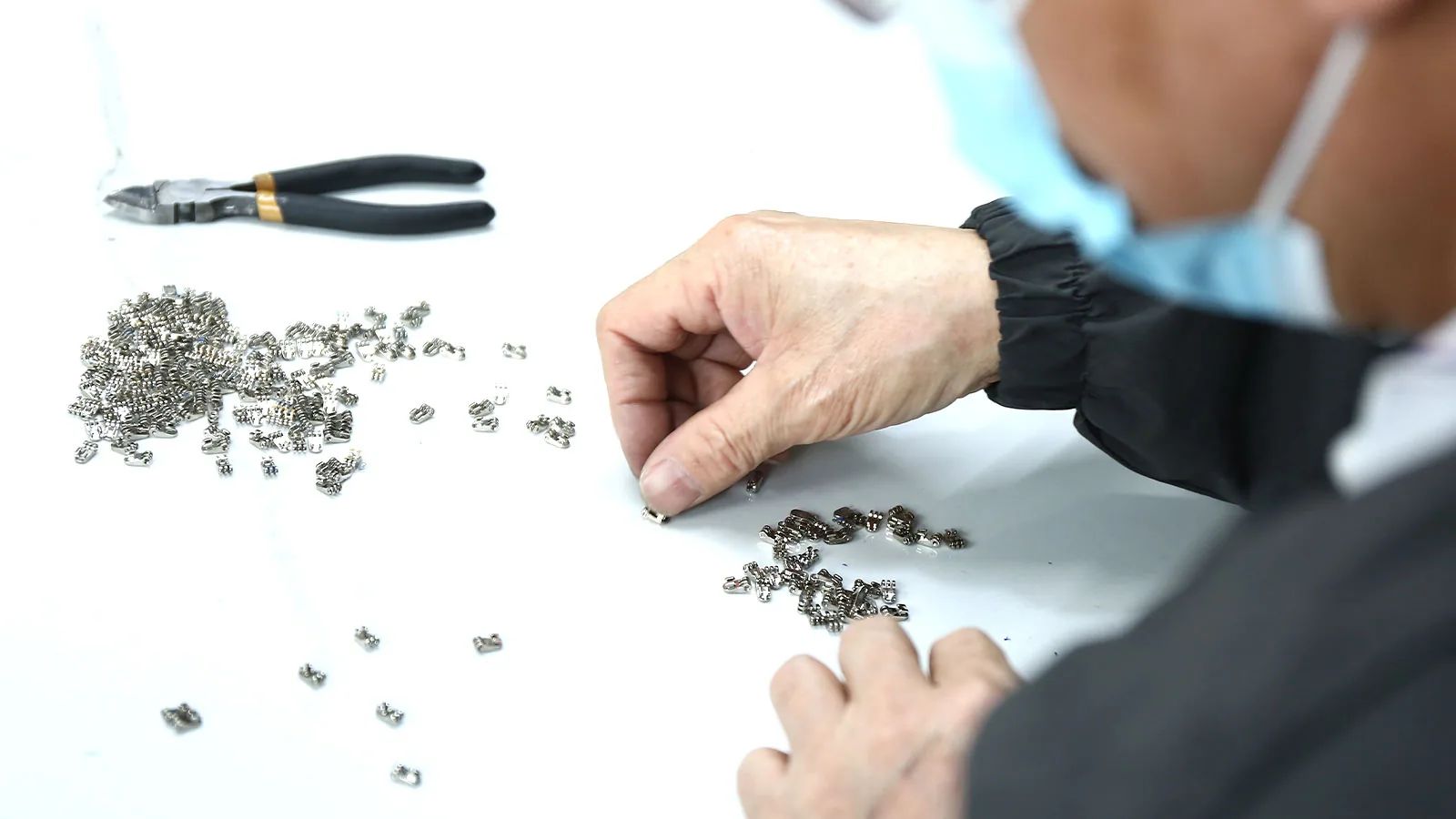
Specialty and decorative hinges. Oversized barrels, exposed decorative pins, colored screws, sculpted leaves, and branded caps. These affect tooling, plating steps, and inspection criteria. Decorative hinges should be evaluated for wear-through of plating, alignment of decorative elements across pairs, and consistency of any visible logo.
Neutral comparison of common trade-offs
Treat this as a starting frame for internal discussion, not a scoring system.
| Hinge type | Typical complexity | Serviceability | Fit behavior | Common consideration |
|---|---|---|---|---|
| Standard barrel | Low | High; screw replaceable | Defined by frame geometry | Screw loosening |
| Spring | Higher | Moderate | Allows additional outward travel | Internal wear or fatigue |
| Flex, non-spring | Varies | Varies by design | Design-specific | Behavior is not standardized |
| Riveted | Low to moderate | Low once riveted | Defined by frame geometry | Rivet pull-out or cracking |
| Molded-in | Tool-dependent | Low | Defined by frame geometry | Late changes can affect tooling |
| Screwless | Moderate to high | Often low | Design-specific | Replacement-part availability |
Compatibility with frame materials
Hinge selection is inseparable from frame construction.
Acetate frames. Acetate carries hinges through embedded dowels or rivets. Key concerns:
Injection-molded polymer frames. For materials such as TR, PC, nylon-based polymers, and similar:
Metal frames. Hinges are typically soldered or welded to the front and temple. Concerns include:
The right hinge for an acetate frame may be entirely wrong for a metal or injection-molded version of the same silhouette.
- Dowel pull-out under repeated stress.
- Cracking or whitening around the embed area if acetate is too thin or improperly conditioned.
- Cosmetic gap between leaf and acetate after polishing.
- Heat-set alignment drift if temples are adjusted at retail.
- The hinge can be molded in, ultrasonically inserted, or screwed to a boss.
- Wall thickness around the hinge boss must support the load without sink marks on the visible face.
- Some polymers accept metal inserts poorly; adhesion and pull-out behavior should be validated on samples.
- Solder joint integrity at the leaf.
- Plating coverage inside barrels, which affects opening feel.
- Compatibility between hinge base metal and frame metal for plating and corrosion behavior.
Design for manufacturing considerations
A few practical points that recur in development reviews:
For teams new to the process, the custom sunglasses manufacturing guide and the OEM sunglasses project checklist provide broader context on where hinge decisions fit within the overall development timeline.
- Temple geometry: the temple must have enough cross-section behind the hinge to carry load without cracking.
- Reinforcement: metal cores inside acetate temples change how the hinge transfers load and how the temple can be adjusted.
- Opening angle: over-open angles reduce perceived tightness; under-open angles increase stress on the front.
- Screw retention: thread engagement length, thread-locking approach, and screw material all affect long-term looseness.
- Serviceability: whether a screw can be tightened at retail or by an optician matters for warranty policy.
- Symmetry: left and right temples should fold with the same feel and stack cleanly.
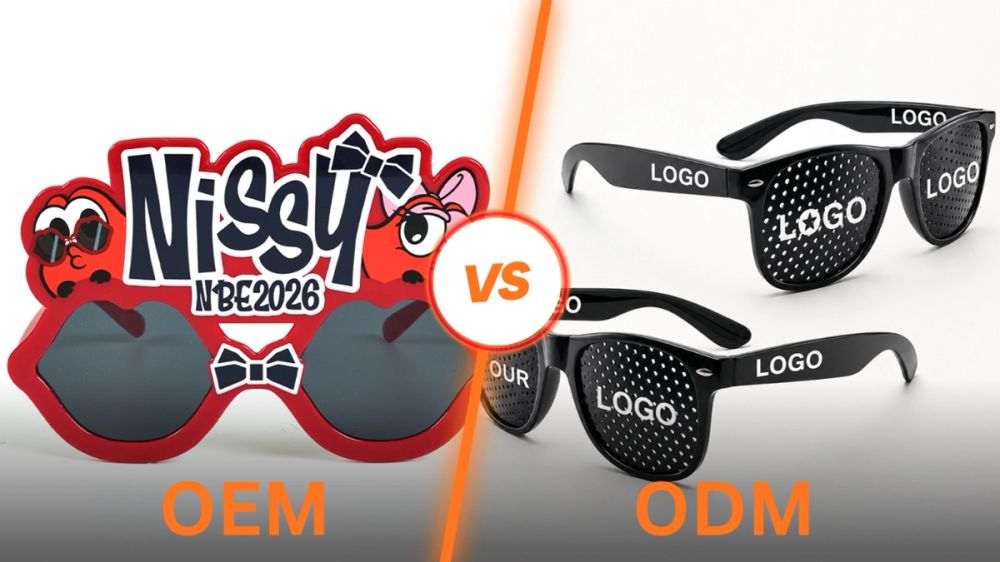
OEM, ODM, and private-label implications
Hinge freedom depends on the sourcing model:
The trade-offs are discussed in more depth in OEM vs ODM vs private label sunglasses.
- Private label: the hinge is fixed by the existing product. Buyers typically choose from finished styles without changing the hinge.
- ODM: the factory's existing platforms constrain hinge choice, but decorative treatments and finishes may be adjustable.
- OEM (custom): hinge selection is open, but tied to tooling and material decisions. Custom hinges usually require additional development time and validated samples.
Specifying hinge performance without copying generic benchmarks
It is tempting to copy numerical thresholds from a competitor's spec sheet. This is risky when the underlying test method, sample condition, and pass criteria are not defined. A more defensible approach:
This keeps expectations enforceable without pretending to a level of precision that has not been agreed upon.
- Define use case (fashion, sport-adjacent, kids, promotional, premium).
- Define acceptance behavior in plain language: for example, "temples must open and close smoothly without stepping, and the opened angle must match the approved gold sample within an agreed visual tolerance."
- Ask the supplier which test methods they routinely apply, and what the pass criteria are. Record their answers rather than dictating unfamiliar figures.
- Align on a gold sample for opening feel, folding symmetry, and cosmetic appearance.
- For destination markets with specific regulations for sunglasses or, where applicable, prescription eyewear, confirm what compliance testing is expected on your specific product; requirements vary by market and product category and are not universal.
Questions to ask suppliers during hinge selection
The sunglasses factory audit checklist contains a broader set of questions covering upstream capability.
- What hinge platforms do you regularly use for this frame material and silhouette?
- Is the hinge produced in-house, sub-assembled, or purchased?
- How is the hinge attached: embedded dowel, rivet, screw-on boss, molded-in, welded, or soldered?
- What screw retention approach is used, and how do you verify it in production?
- What sample validation do you perform before mass production?
- What is your standard rework path if hinge alignment issues are detected on the line?
- Can you provide reference samples showing opening feel and folding symmetry we can approve as the gold standard?
- For decorative hinges, how do you control plating and cosmetic consistency?
Sample approval: what to actually check
Before signing off on pre-production samples:
Approve one physical gold sample per SKU and keep a controlled copy at the factory and at your office.
- Opening and closing feel: smooth, no grinding, no stepping.
- Opened angle: consistent between left and right temples and matching the approved reference.
- Folding symmetry: temples stack evenly when folded, without one riding significantly above the other.
- Screw seating: screw heads flush with the barrel, no protrusion that could catch skin or a case lining.
- Barrel alignment: barrels of front and temple aligned along a single axis, without visible offset.
- Cosmetic finish: no plating burn-through at the barrel edges, no polishing marks, no adhesive residue.
- Around-hinge frame condition: no whitening, cracks, sink marks, or gaps.
- Spring behavior (if applicable): consistent return, no internal noise, no visible spring cassette gap.
Production inspection checkpoints
During and after production, focus AQL sampling on:
Document decisions with photos referenced back to the gold sample.
- Alignment of front and temple when opened.
- Opening feel across the sample.
- Screw retention: no loose screws, no missing thread-lock where specified.
- Folding symmetry within visual tolerance against the gold sample.
- Pull-out risk indicators for embedded dowels: visible movement, whitening, or gaps.
- Finish quality at the hinge area, including plated barrels and any decorative caps.
Common selection mistakes
Most hinge problems begin when the component is selected without considering the surrounding frame system, the intended use, or how the finished assembly will be checked.
- Choosing a hinge by name only. Two "spring hinges" from different sources can behave very differently.
- Ignoring temple cross-section. A hinge that works on a chunky acetate front may fail on a slimmer version of the same design.
- Late decorative changes. Adding an oversized decorative barrel after mold design freeze can force tooling changes.
- Copying competitor spec numbers without agreeing on the test method behind them.
- Skipping the gold sample. Verbal descriptions of "smooth opening" are not enforceable at inspection.
- Overlooking serviceability. Screwless or fully embedded hinges can simplify assembly but complicate returns handling.
Where DOMI fits, conditionally
DOMI is a China-based B2B sunglasses supplier that has been manufacturing and supporting customers since 2008, with more than 300 existing molds and an annual capacity of around 5 million pairs across custom OEM, ODM, and private-label work. For buyers exploring hinge options within an existing platform, ODM styles can shorten evaluation time. For fully custom programs, hinge choice will be discussed in the context of frame material, tooling, and target use case rather than as an isolated component decision.
Whether an existing platform or a new tool is the right starting point depends on volume, timeline, and how much of the frame system is genuinely new. The custom sunglasses mold development page outlines how tooling decisions interact with component choices such as hinges.
Next steps
If you are scoping a custom program, start by clarifying frame material, temple geometry, target use case, and decorative direction. Then discuss hinge options against that context with your supplier, and lock the decision with a gold sample and a written inspection plan.
FREQUENTLY ASKED QUESTIONS
Questions Buyers Often Ask
Is a spring hinge always better than a standard barrel hinge?
No. A spring hinge can accommodate more outward travel but adds parts and failure modes. A well-executed standard barrel may be the more suitable choice for some use cases, frame geometries, and service requirements.
Can we change the hinge after tooling is cut?
Sometimes, if the mounting interface and surrounding geometry stay unchanged. A change to the hinge pocket, anchor, or boss can require tool modification, so confirm feasibility before assuming it is a simple component swap.
How do we specify hinge quality without copying generic benchmarks?
Define the use case, agree on a physical gold sample, and document the test method and acceptance criteria the supplier will use. Enforce against that agreed method rather than unrelated figures from another product.
Do sunglasses need to meet the same hinge-related rules as prescription eyewear?
Not necessarily. Requirements vary by destination market and product classification. Confirm the rules that apply to the specific product rather than treating all eyewear categories as identical.
What is the biggest hinge-related risk in a new custom program?
Approving the hinge in isolation. The actual frame material, temple geometry, reinforcement, decoration, assembly method, and inspection plan determine whether the complete system will perform as intended.
PLANNING A SUNGLASSES PROJECT?