Buying Guides
OEM vs ODM vs Private Label Sunglasses: What Is the Difference?
Learn what OEM, ODM and private label mean in sunglasses sourcing, how the three models differ and which route fits your product plan.What Do OEM, ODM and Private Label Mean?
OEM, ODM and private label describe different ways for a buyer and a sunglasses factory to divide product development work. The terms are widely used, but suppliers do not always define them in exactly the same way. A useful quotation should therefore explain what already exists, what will be changed, who supplies the design and whether new tooling is required.
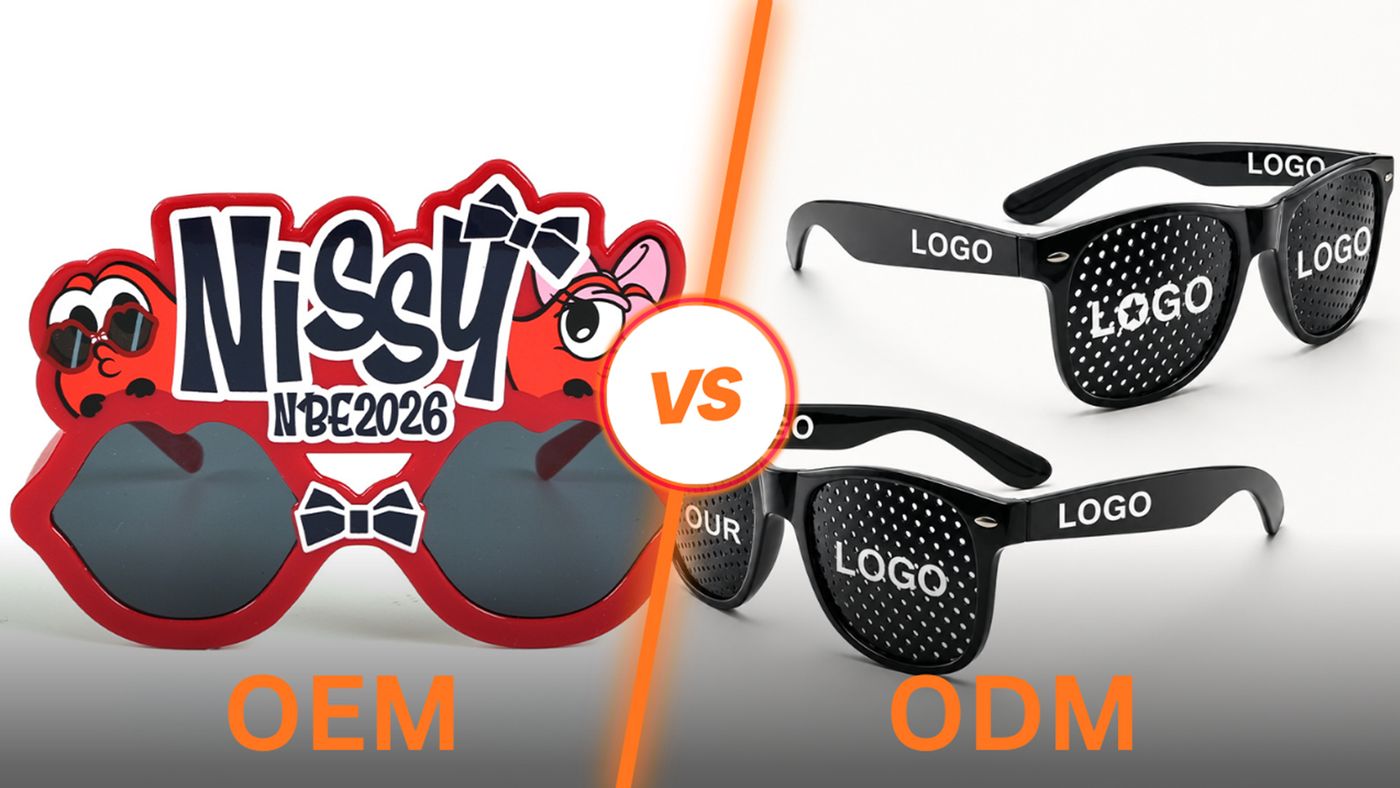
OEM, or original equipment manufacturing, usually means the factory manufactures sunglasses to a buyer-led design or specification. The buyer may provide drawings, a reference sample, dimensions, materials or functional requirements. If the shape or construction is new, the project can require engineering review, a new mold and trial-sample approval.
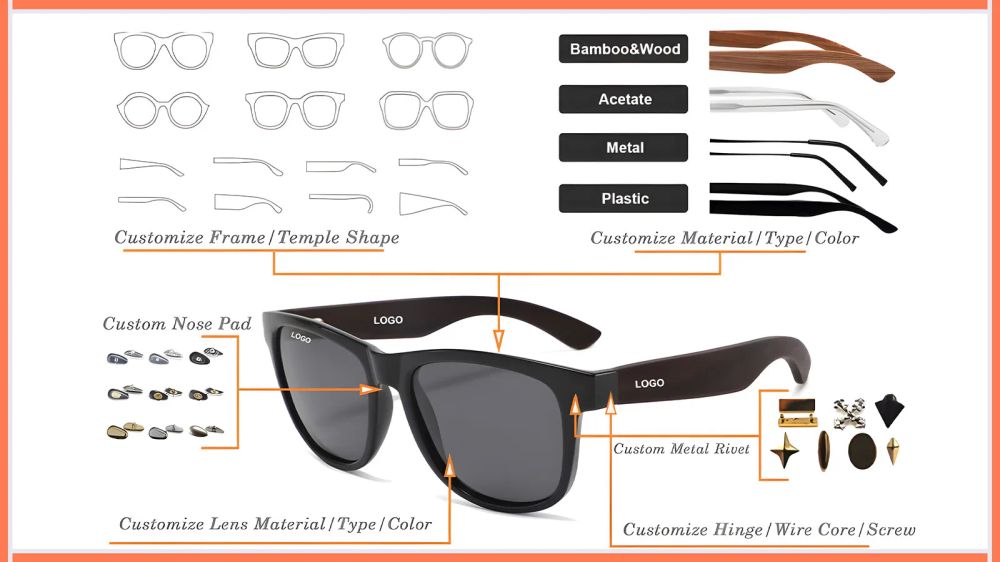
ODM, or original design manufacturing, usually begins with a product platform developed by the factory. The buyer selects an existing frame or mold and customizes approved details such as color, lenses, logo treatment and packaging. The underlying frame geometry and construction normally remain tied to that platform.
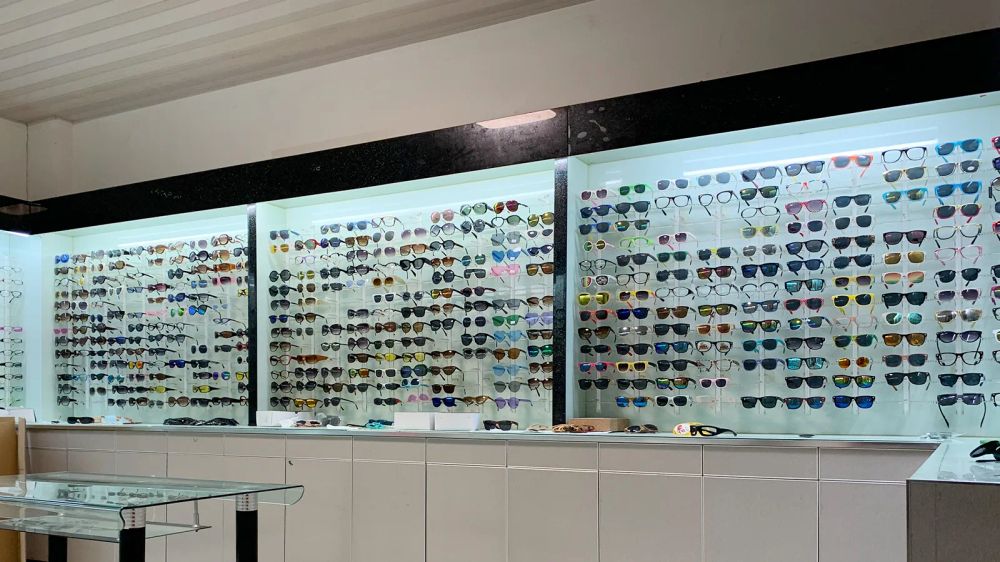
Private label sunglasses start with an already-developed or ready-stock product that is sold under the buyer’s brand. The work is concentrated on product selection, logo application, packaging and assortment planning rather than structural development. This is generally the simplest route when speed and a lower initial commitment matter more than a proprietary frame design.
| Model | Starting point | Typical buyer input | Typical development depth |
|---|---|---|---|
| OEM | A buyer-led design or specification | Drawing, sample, dimensions or product brief | Can include new structure, tooling and full product development |
| ODM | A factory-developed frame or mold | Selected platform plus requested colors, lenses, logos and packaging | Adapts approved options without redesigning the complete structure |
| Private label | An existing or ready-stock product | Brand artwork, packaging, quantity and assortment | Brand presentation with little or no structural change |
These are practical sourcing definitions, not universal legal categories. Always use the written specification and quotation to confirm the actual scope.
OEM vs ODM vs Private Label Sunglasses at a Glance
The main difference is the product starting point. That starting point influences design control, tooling, approvals, commercial risk and time to market. The table below is a general comparison; exact terms still depend on the selected factory, product and contract.
| Decision factor | Private label | ODM | OEM |
|---|---|---|---|
| Starting point | An already-developed or ready-stock style | A factory-developed frame or mold | A buyer drawing, reference sample or new product brief |
| Typical development work | Branding, packaging and assortment preparation | Color, lens, logo, surface graphic and packaging coordination | Drawing review, 3D confirmation, tooling, trial sample and production setup |
| New mold | Normally not required | Normally not required | Required when the approved structure or shape is new |
| Design control | Lowest: the base product is already defined | Moderate: approved options can be combined on an existing platform | Highest: the buyer can define a new product specification |
| Tooling exposure | Usually none for the base product | Usually none unless the requested change affects the structure | Possible or likely when the shape or construction is new |
| Typical approvals | Product, available color, artwork and packaging | Customization specification, artwork and physical sample | Drawing or 3D proposal, tooling route, trial sample and final specification |
| Best suited to | Fast launches, market tests and branded programs using an existing product | A more distinctive collection without developing a complete new frame | A new silhouette, structure, function or buyer-controlled product design |
MOQ, cost and lead time are not fixed by the acronym alone. Material, color split, tooling, logo process, packaging and approvals all affect the final quotation.
How Private Label Sunglasses Work
A private label buyer chooses an existing sunglasses model and presents it as part of the buyer’s own brand. Depending on the supplier and product, the selectable scope may include available frame colors, a logo on the temple or lens, a pouch or case, printed boxes, labels and hang tags.
The main advantage is speed: the frame and production method already exist, so the buyer can focus on branding, assortment and sales-channel requirements. The main limitation is differentiation. Other buyers may be able to purchase the same base model unless exclusivity is explicitly agreed.
Private label and white label are sometimes used interchangeably. In practice, white label usually describes the least customized version of an existing product, while private label often includes buyer-specific branding and packaging. Neither term automatically guarantees exclusivity.
- Confirm current stock and the quantity available by color.
- Match the logo method to the artwork and product surface.
- Approve packaging and carton requirements before production.
- Record the finished sample or artwork as the order reference.
How ODM Sunglasses Development Works
ODM sunglasses use a design platform that the factory has already developed. A buyer can select a suitable frame and build a more distinctive specification around it through approved materials, Pantone colors, lens options, logo positions, surface graphics and packaging.
Because the basic structure and mold already exist, ODM can reduce development work compared with a completely new product. It still requires careful feasibility review: not every material, lens or decoration method works on every frame, and a physical sample is normally used to confirm the chosen combination.
The buyer should ask which parts are fixed. Frame geometry, hinge construction, component dimensions and some material choices may be controlled by the existing platform. If the requested change affects those elements, the project may need to move into a full-custom route.
How OEM Sunglasses Manufacturing Works
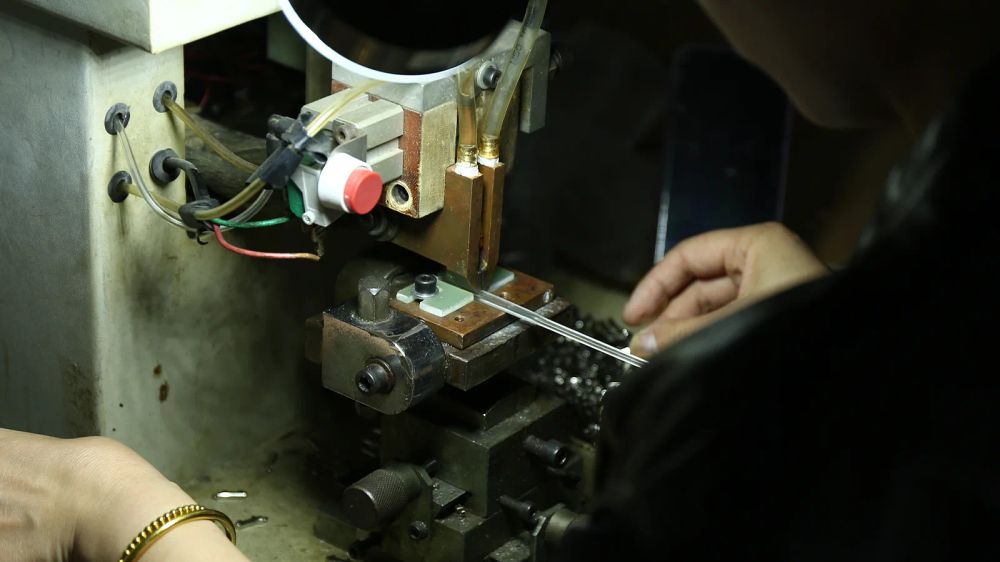
OEM sunglasses manufacturing begins with a buyer-led product requirement. The input may be a technical drawing, reference sample, hand sketch or functional brief. The factory evaluates whether the design is manufacturable, organizes the specification and confirms the development steps required before mass production.
When the approved design uses a new shape or structure, the route can include 2D or 3D confirmation, prototype or sample review, mold development, an injection or trial sample and final production approval. This is the appropriate route when the product itself—not only the branding—must be different.
OEM offers the most design control but also creates the greatest approval and change-management burden. Mold ownership, design use, exclusivity, revision responsibility and acceptance standards should be written into the project agreement. Paying for a mold does not by itself settle every intellectual-property question.
Why MOQ, Cost and Lead Time Cannot Be Compared in Isolation
OEM is usually assumed to require the highest commitment, ODM to sit in the middle and private label to offer the lowest entry point. That order is often directionally useful, but it is not a price list. A simple OEM product may be easier to produce than a heavily decorated ODM frame, while a private label order split across many colors can create its own minimums.
Compare quotations only after normalizing the specification. A quoted lead time may start after deposit, artwork approval, sample approval or material confirmation, and it may exclude packaging preparation and international transport. Ask every supplier to state the same boundaries.
| Quotation item | What the buyer should confirm |
|---|---|
| MOQ | Whether it applies per style, per color, per logo design or to the total order |
| Lead-time start | Deposit date, sample approval date or another confirmed production trigger |
| Sampling | Which sample is included, what it confirms and how revisions affect timing |
| Tooling | Tooling scope, payment, revision responsibility and the project-specific mold arrangement |
| Packaging | Individual packaging, printed packaging, carton marks and packing quantities |
| Shipping | Whether the quoted schedule includes international transport and destination clearance |
Which Sunglasses Sourcing Model Fits Your Project?
Begin with the requirement that cannot be compromised. A short launch window may favor private label. A specific color, lens and branding combination may fit ODM. A new silhouette, structure or functional feature may require OEM. Many brands use more than one route across a collection rather than forcing every product into the same model.
| Your project starts with… | Review this route first | Why |
|---|---|---|
| A short schedule and an existing acceptable style | Private label / ready stock | The product platform is already available; the work centers on branding and packaging. |
| An existing frame that needs coordinated colors, lenses and branding | ODM / semi-custom | The product can be differentiated without developing a new mold. |
| A new drawing, silhouette or structural requirement | OEM / full custom | The project requires engineering review, tooling and trial-sample approval. |
| Uncertain requirements or mixed quantities | Feasibility review before quotation | The factory should separate fixed requirements from optional changes before confirming the route. |
Clarify Design Ownership, Exclusivity and Compliance
OEM does not automatically mean that every design right or mold right belongs to the buyer. ODM does not automatically rule out an exclusive arrangement. Private label does not automatically mean the same finished specification is available to every customer. These questions are commercial and contractual, so they must be stated explicitly.
Product compliance is also separate from the sourcing acronym. Requirements depend on the selected sunglasses model, lens properties, intended user and destination market. Buyers should identify required documents or testing before approving production, and confirm that any report applies to the exact product being ordered.
The written reference should connect the drawing or selected model, materials, colors, lenses, artwork, packaging, approved sample, inspection scope and shipment approval. That documentation matters more than whether the project is casually called OEM or ODM.
How DOMI Applies These Models to Real Sunglasses Orders
For quotation purposes, DOMI translates the terminology into three practical routes. Ready-stock customization is closest to private label, semi-custom work on an existing frame is closest to ODM, and a new product requiring tooling is closest to OEM. The labels are useful, but the confirmed product specification remains the controlling document.
These figures are DOMI planning references rather than industry-wide definitions. Final MOQ and timing depend on the selected model, color allocation, logo process, packaging, sampling and approval requirements.
| DOMI route | Closest sourcing model | Reference MOQ | Reference production time |
|---|---|---|---|
| Ready stock | Private label | From 100 pairs | About 5–10 calendar days |
| Semi-custom existing frame | ODM | From 300 pairs | About 20–30 calendar days |
| Full-custom development | OEM | From 2,000 pairs | About 40–60 calendar days |
Reference timing starts from receipt of the 30% deposit, uses calendar days and excludes international transportation. The approved quotation takes priority.
Questions to Ask Before Choosing a Supplier Route
A useful enquiry does not need a finished technical file, but it should make the product starting point and commercial priorities clear. Use the questions below to expose differences that the words OEM, ODM and private label can hide.
- Does the project start from an existing finished product, an existing mold or a buyer-led design?
- Which frame, lens, color, logo and packaging elements can actually be changed?
- Is new tooling required, and what do the mold-use and revision terms say?
- Does the MOQ apply per style, color, logo design or total order?
- Which sample or drawing becomes the approved production reference?
- When does the quoted lead time begin, and what work is excluded?
- Which documents or tests apply to the exact model and destination market?
- Can the buyer arrange third-party pre-shipment inspection?
FREQUENTLY ASKED QUESTIONS
Questions Buyers Often Ask
What is the practical difference between OEM and ODM sunglasses?
In practical sourcing, OEM usually begins with a buyer-led product specification, drawing or new design, while ODM usually adapts a factory’s existing platform. Terminology varies between suppliers, so the quotation should state the actual development work, tooling and approvals rather than relying on the acronym alone.
What is the difference between private label and white label sunglasses?
Both normally begin with an existing product. White label often means the same finished product is offered to multiple buyers with minimal changes, while private label often includes buyer-specific branding, packaging and assortment decisions. Suppliers use the terms differently, and neither one automatically guarantees exclusivity.
Do OEM sunglasses always require a new mold?
No. A new mold is needed when the approved shape or structure cannot be produced from an existing mold. Because suppliers use OEM differently, buyers should ask whether the quotation includes existing tooling, modified tooling or completely new tooling.
Does an OEM order automatically give the buyer mold ownership and exclusivity?
No. Mold ownership, design use, exclusivity, maintenance, storage and revision rights should be written into the project agreement. The OEM label or payment of a mold fee does not settle every ownership question by itself.
Can a project move from ODM to OEM development?
Yes. If requested changes go beyond the limits of the existing frame or require a new structure, the project can be reassessed as full-custom development. The factory should confirm the new tooling, sample, MOQ, cost and schedule before work continues.
How should buyers compare OEM, ODM and private label quotations?
Ask each supplier to quote the same product specification, quantity and color split and to identify included design work, tooling, samples, packaging, testing, approvals and the lead-time starting point. Comparing acronyms without normalizing those items can be misleading.
PLANNING A SUNGLASSES PROJECT?