Manufacturing & Quality
Sunglasses Factory Audit Checklist
Use this sunglasses factory audit checklist to assess supplier documentation, production controls, quality records, capacity, traceability and corrective-action readiness before mass production.Why factory audits matter for sunglass buyers
Your samples look perfect and the production order is waiting. Then the questions start: Will bulk lenses match the approved sample? Are FDA and CE claims backed by real records? Can the factory hold your delivery date without rushing assembly?
For eyewear brands and importers, one missed compliance document or one unstable lens coating can damage retail relationships and consumer trust. A structured sunglasses factory audit checklist turns supplier evaluation into a risk-control tool covering compliance, quality, delivery reliability, and brand protection.
This B2B guide organizes the documents, production controls and floor-level evidence a buyer can review before approving mass production. It is a practical framework, not a substitute for market-specific legal or laboratory advice.
A factory audit verifies whether a supplier can control quality, meet compliance requirements, and deliver stable products at commercial scale. Skipping it converts a low unit price into a costly sourcing mistake through rework, air freight, chargebacks, and canceled orders.
Common failure categories in sunglass manufacturing include:
For private-label buyers, the finished product carries the buyer's brand. Labeling, test evidence and production records therefore deserve the same attention as visible workmanship.
- Lens distortion, haze, or poor optical clarity
- Incorrect or unverified UV protection claims
- Uneven tint or color mismatch versus approved sample
- Loose hinges, weak screws, or frame warping
- Peeling logos and coating transfer
- Weak packaging for long-distance shipping
Service tier and MOQ alignment
Audit a factory whose production model matches your volume strategy. Auditing the wrong tier wastes resources.
Confirm which route the factory genuinely supports. The figures above reflect DOMI's current planning bands and remain subject to model, materials, packaging, testing, capacity and final specification. For a fuller explanation, see what affects sunglasses MOQ, samples and lead time.
| Tier | MOQ | Lead time | Best for |
|---|---|---|---|
| Ready-stock route | From 100 pcs | About 5–10 days | Existing products with limited customization |
| Semi-custom route | From 300 pcs | About 20–30 days | Existing product base with selected branding or specification changes |
| Full-custom route | From 2,000 pcs | About 40–60 days | New shapes, tooling or deeper specification development |
Regional compliance standards for eyewear imports
Consolidate compliance verification into one checkpoint. Non-compliance creates customs delays, product holds, and mandatory recalls — a factory's legal credentials mean little if its production cannot pass end-market technical standards.
Required audit evidence: copies of test certificates from previous orders, accreditation status of testing partners, lead times for compliance testing, and the factory's process for addressing failed tests. Never accept verbal claims — require lab test reports or certification numbers for every standard relevant to your market.
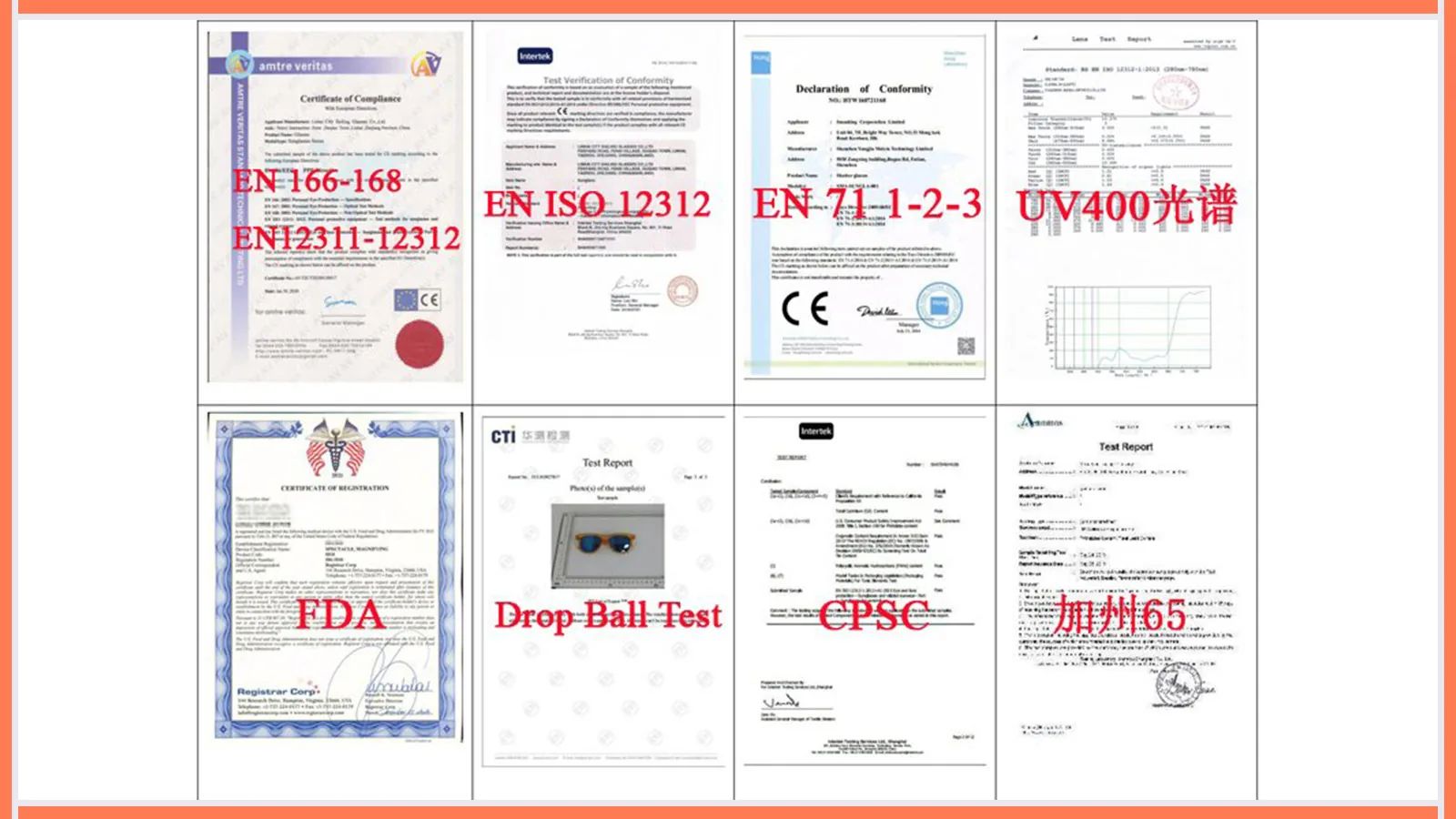
| Market | Mandatory standards |
|---|---|
| United States | Confirm the rules, labeling and test evidence applicable to the product, claims and sales channel; do not treat a factory registration as product approval |
| European Union & UK | Confirm the applicable conformity route, technical file, labeling and product-specific test evidence |
| Canada | Confirm the current requirements for the product category and intended use |
| Australia & New Zealand | Confirm the current sunglass and fashion-spectacle requirements and classification |
| Product claims | Match every UV, polarization, impact, material or coating claim to relevant product-specific evidence |
| Buyer or retailer programs | Review only when required by the customer, channel or sourcing policy; verify site and scope |
Pre-audit preparation
Define rejection criteria and required evidence before booking inspectors so all parties share the same standards.
Audit team and tools. Assemble a lead auditor, product quality specialist, compliance reviewer, and sourcing manager. Bring the audit checklist, approved sample, measuring tools, UV tester, camera, document request list, and CAP template.
The golden sample. Before mass production, produce 3–5 factory samples and evaluate each across six dimensions: lens quality, material composition, structural integrity, ergonomic fit, color (Pantone) verification, and labeling/branding. Once approved, produce 3–4 identical golden samples — seal one in a safe, ship one to the factory with photographic seal-integrity confirmation, and deliver one to your inspection team at least one week before PSI. Include PO language requiring all production units to match within defined tolerances.
- Desk review. Business license, export registration, ISO certificates (English + local language)
- Cross-check names across invoices, certificates, shipping records, factory address
- Export history: shipment consistency, product descriptions, destination markets
- Past third-party audit reports — focus on recurring findings, not isolated remarks
- Monthly output by product type (acetate, TR90, metal, sports, promotional)
- Pre-audit document request. Business license and export registration
- Factory layout and production flow chart
- Organization chart (management + QC)
- Equipment list and maintenance records
- Main material and sub-supplier list
- Recent IQC, IPQC, and final inspection records
- Test reports for lenses, coatings, and finished units
The sunglasses factory audit checklist
Use the table below as your scannable, pass/fail audit framework. Each row is a verification point with objective criteria.
Step 1 — legal, credentials, and QMS
Use the table below as a structured reference for this section.
| # | Audit item | Pass criteria | Fail signal |
|---|---|---|---|
| 1.1 | Business license | Legal name matches quotation, invoice, bank account, signage; scope covers eyewear/optical manufacturing | Name mismatch; scope limited to import/export |
| 1.2 | Export capability | Valid export license and customs registration for target market | Reliance on third-party agent |
| 1.3 | Market-readiness file | Applicable declarations, labels and test evidence are mapped to the actual SKU and target market | Generic certificates or evidence for another model |
| 1.4 | EU/UK evidence when applicable | Current technical and test evidence matches the actual frame, lens type and filter category | Generic report or mismatched SKU |
| 1.5 | ISO 9001 | Certificate valid, scope covers eyewear manufacturing at audited site | Certificate from sister company or trading arm |
| 1.6 | QMS records | Traceable non-conformance reports, CAPA logs, management review minutes | Undated, unsigned, or generic forms |
| 1.7 | Complaint handling | Documented root cause analysis and verified corrective action | Replacement-only response |
Step 2 — facility, equipment, and QC lab
Use the table below as a structured reference for this section.
| # | Audit item | Pass criteria | Fail signal |
|---|---|---|---|
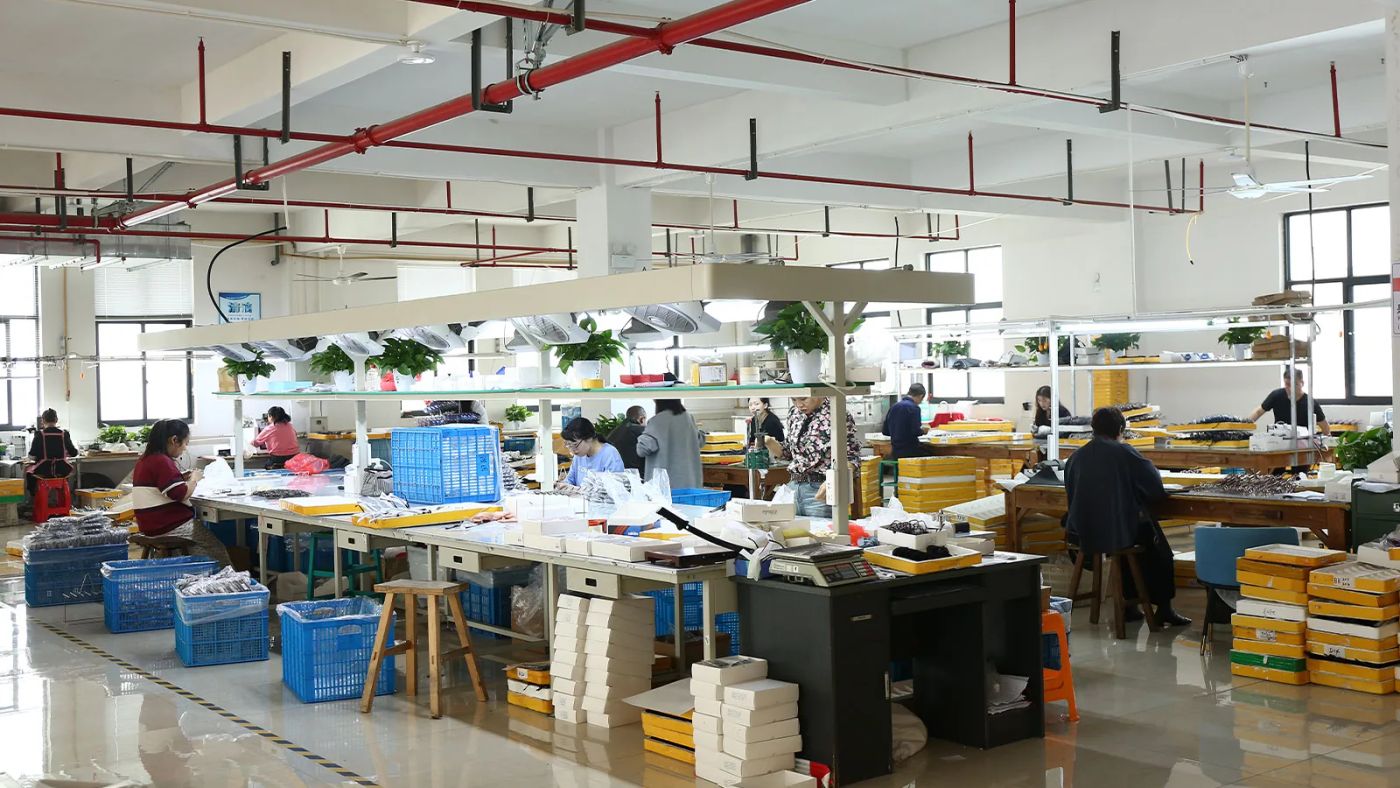
| 2.1 | Capacity match | Active assembly lines and operator count support stated daily output | Idle lines with claimed peak capacity |
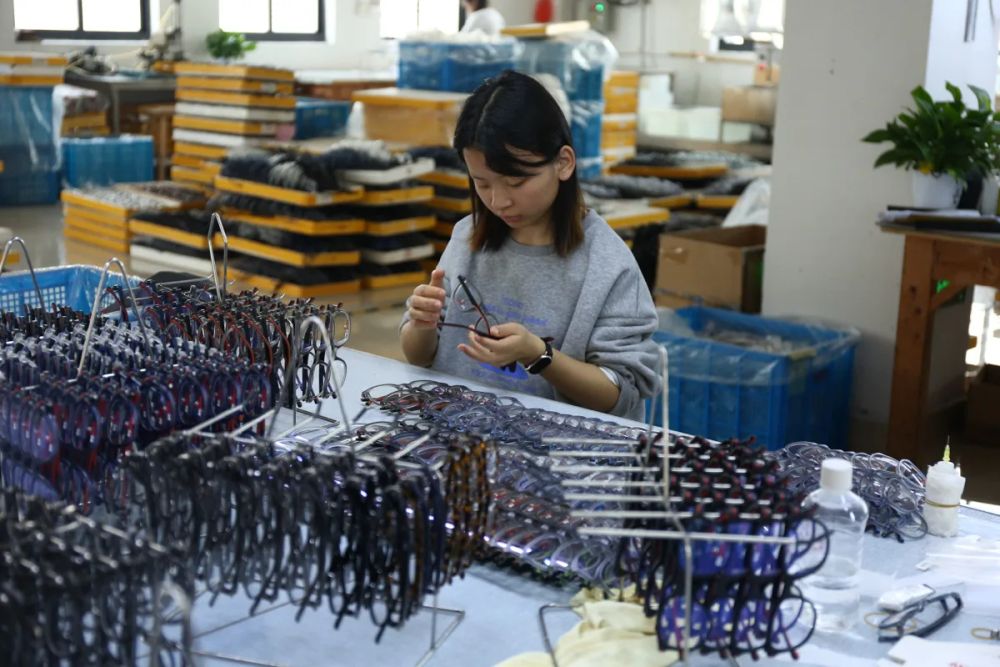
| 2.2 | Line layout | Logical flow: frame → lens fitting → hinge → cleaning → packing | Excessive backtracking, cross-contamination risk |
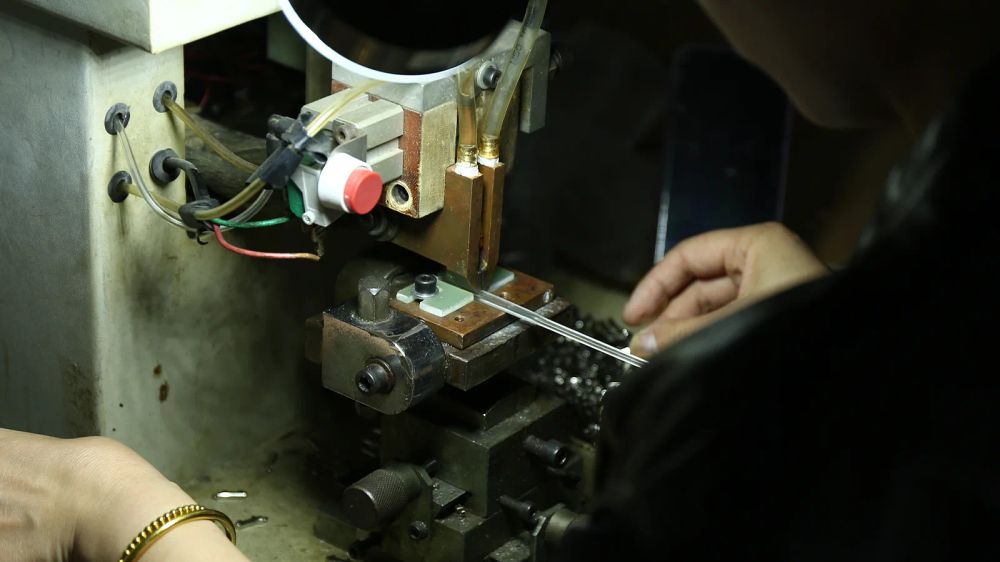
| 2.3 | Equipment condition | Injection, CNC, and polishing machines running with stable settings; maintenance logs signed | No calibration records; operator-memory maintenance |
| 2.4 | Environment | Clean floors, separated wet/dry/dusty areas, adequate lighting and ventilation | Dust on lenses at final inspection |
| 2.5 | Material storage | Accepted / rejected / pending materials clearly segregated; FIFO enforced | Mixed-status shelves |
| 2.6 | QC lab | In-house spectrometer, UV tester, drop-ball tester, dimensional fixtures; calibrated | Equipment used only during audits |
| 2.7 | UV traceability | Batch-level UV results with date, operator, acceptance criteria | Verbal UV400 claim |
Step 3 — raw materials, IQC, and sub-supplier control
Consolidate IQC and component sourcing into one verification block. Frame defects, coating failures, and loose hinges originate at receiving.
Defect severity definitions (apply during IQC and PSI):
- Critical: Safety-related or legally non-compliant conditions defined in the buyer-approved defect list; the acceptance rule must be agreed before inspection
- Major (AQL 1.0): Causes customer return without safety risk (loose hinge, color mismatch)
- Minor (AQL 2.5): Cosmetic imperfections tolerable in limited quantities
| # | Audit item | Pass criteria | Fail signal |
|---|---|---|---|
| 3.1 | Lens IQC | Batch ID, PO, color code, thickness, coating status recorded; three-tier AQL (Critical 0 / Major 1.0 / Minor 2.5) | Single AQL threshold applied to all defects |
| 3.2 | Lens attributes checked | Type/grade, tint density, thickness, base curve, surface defects, polarization axis, UV claim | Generic checklist across all lens types |
| 3.3 | Acetate sheets | Thickness, color consistency, pattern alignment, flatness verified before cutting | Inspection after warping detected |
| 3.4 | Metal components | Diameter, plating, oxidation, hardness, bending performance recorded | Visual check only |
| 3.5 | Sub-supplier list | Documented list of hinges, screws, nose pads, coating, plating, packaging suppliers with approval status | "Long-term partner" cited without records |
| 3.6 | Sub-supplier qualification | Sample approval, trial production, scorecards, rejection history maintained | Certificate on file, no performance data |
| 3.7 | Traceability test | Pick one finished carton → identify frame, lens, and hardware batch + supplier within minutes | Manager intervention required |
| 3.8 | Locked suppliers | Buyer-approved lens, hinge, plating, packaging sources cannot change without written approval | Silent supplier substitution |
Step 4 — inspection lifecycle (IPQC to PSI)
Use the table below as a structured reference for this section.
| Stage | Timing | Purpose | Key evidence |
|---|---|---|---|
| IPQC | During production | Halt drift in tint, color, or UV before defects compound | Signed in-process records |
| DUPRO | 30–50% completion | Validate mold performance and assembly consistency versus golden sample | Photo report, dimensional log |
| Technical document verification | Pre-shipment | Confirm material certs, UV reports (ISO 12312-1), dimension logs are complete and traceable | Full documentation pack |
| Customized inspection | Per material stream | Metal vs. polycarbonate protocols applied separately | Material-specific test records |
| Pre-shipment inspection (PSI) | 100% packed | Final gate under ISO 2859-1 sampling; includes frame weight, slip-resistance, drop-ball | Photographic loaded-stock documentation |
Conducting a remote video audit
Use remote audits for pre-qualification, follow-up checks, or when travel is restricted. Insist on live, unedited walkthroughs — never pre-recorded tours. Schedule with minimal notice to prevent staging.
Required live demonstrations:
Document with timestamped screenshots and archived video for compliance records.
- Walk-through of production floor with visible machine count versus claimed capacity
- Acetate curing area (confirm 45–60 day cycle knowledge for custom orders)
- Live drop-ball test on a sample lens in the QC lab
- QC station demonstrating AQL 2.5/4.0 defect checks
- Raw material storage (acetate, metal, lens blanks)
- Target-market technical files, declarations and product-specific reports displayed live when applicable
- ISO 9001 certificate held to camera with expiry visible
- Final inspection reports with defect categorization, not blank stamps
- Direct disclosure of any outsourced production steps
- Brief view of break areas and worker facilities
Post-audit: reporting and corrective action
Classify findings as critical, major, minor, or observation. Each major finding needs clear photographic evidence — vague notes invite supplier disputes.
Corrective action plan (CAP). Every non-conformity must have:
Example CAP prioritization (set actual deadlines according to risk and the production plan):
Do not release affected goods until the agreed verification method confirms closure of release-blocking findings.
- Audit report structure. Factory overview and audit scope
- Date, auditors, factory contacts
- Overall score and risk level
- Findings by area, with photos and location notes
- Executive recommendation: approved / approved with conditions / rejected
- Problem description
- Required corrective action
- Responsible person and department
- Completion deadline (tied to production schedule)
- Required proof of correction
- Verification method (document review or follow-up visit)
- Preventive action to stop recurrence
Material-interaction example: acetate and metal hardware
A frame can pass visual inspection while a material interaction remains undiscovered. For acetate-and-metal designs, review plating specifications, supplier records, compatibility testing and the conditions used for verification. The lesson is general: approval should cover the complete material system, not each component in isolation.
Audit takeaways:
When reviewing a supplier's CAP after material failures, require enhanced testing protocols, equipment investment, and staff training — not procedural edits alone. Verify remediation testing before authorizing production restart.
- In-house QC has blind spots — material-compatibility failures need dedicated protocols.
- Standards compliance requires comprehensive testing beyond visual inspection.
- Independent verification exposes gaps that internal procedures document but do not actually execute.
Summary
A sunglasses factory audit is a strategic control point for a reliable eyewear supply chain. Adapt the checklist, defect severity, sampling plan and evidence requirements to the product, order volume and target market. Review DOMI's eyewear manufacturing process and factory information when comparing the questions in this guide with a specific project; for a new or high-risk supplier, consider qualified third-party inspection.
FREQUENTLY ASKED QUESTIONS
Questions Buyers Often Ask
Which certifications must a credible sunglasses factory hold?
There is no universal certificate bundle for every sunglass order. Build the evidence list from the product, claims, target market and sales channel. Verify that each report or declaration matches the actual SKU, materials, lens category, manufacturing site and current scope; use qualified compliance advice where required.
How do i verify a factory's QC claims?
Request the QC manual, batch testing records, UV transmittance logs, and past six months of defect data. Audit the QC station live — confirm inspectors follow written protocols and produce signed sheets tied to batch numbers.
On-site vs. remote video audit — which do i choose?
Use remote video for pre-qualification and follow-up spot-checks. Use on-site before first large orders, after quality failures, or when certifications are disputed. On-site reveals equipment maintenance, worker training, and storage conditions that video cannot capture reliably.
What documents should i request before the audit?
Request the approved sample, target-market evidence, capacity and process records, QC procedures, sub-supplier controls, recent defect data, training records and equipment calibration logs. Define a risk-based random sample size before the audit rather than relying on one fixed number.
Do EU-bound sunglasses require CE marking?
Yes. Products must carry CE marking and comply with EN ISO 12312-1. During audit, request the EU Declaration of Conformity, third-party lab reports, and technical files linked to specific production batches. Reject any CE claim without independent lab documentation.
What defects should trigger automatic rejection at IQC?
Automatic rejection should follow the buyer-approved defect catalogue. Typical release-blocking examples include failed safety or optical requirements, missing mandatory evidence, structural failures and deviations from the approved sample outside documented tolerances. Define measurements and limits before production.
How fast should corrective actions close after audit failure?
Closure time depends on risk, root cause, testing and the production schedule. Require a written CAP with an owner, deadline and objective proof. Re-audit or re-test before release whenever the original finding can affect safety, compliance or repeated production quality.
PLANNING A SUNGLASSES PROJECT?