Manufacturing & Quality
Custom Sunglasses MOQ Guide
Compare DOMI’s ready-stock, semi-custom and full-custom MOQs, then plan samples, packaging, lead time and a lower-risk first order.What MOQ Means in Custom Sunglasses Production
MOQ—minimum order quantity—is the smallest production quantity a supplier can accept for a defined product setup. It is not a universal number for every pair of sunglasses. The applicable MOQ depends first on whether the product already exists, can be adapted from an existing frame or must be developed from a new drawing or structure.
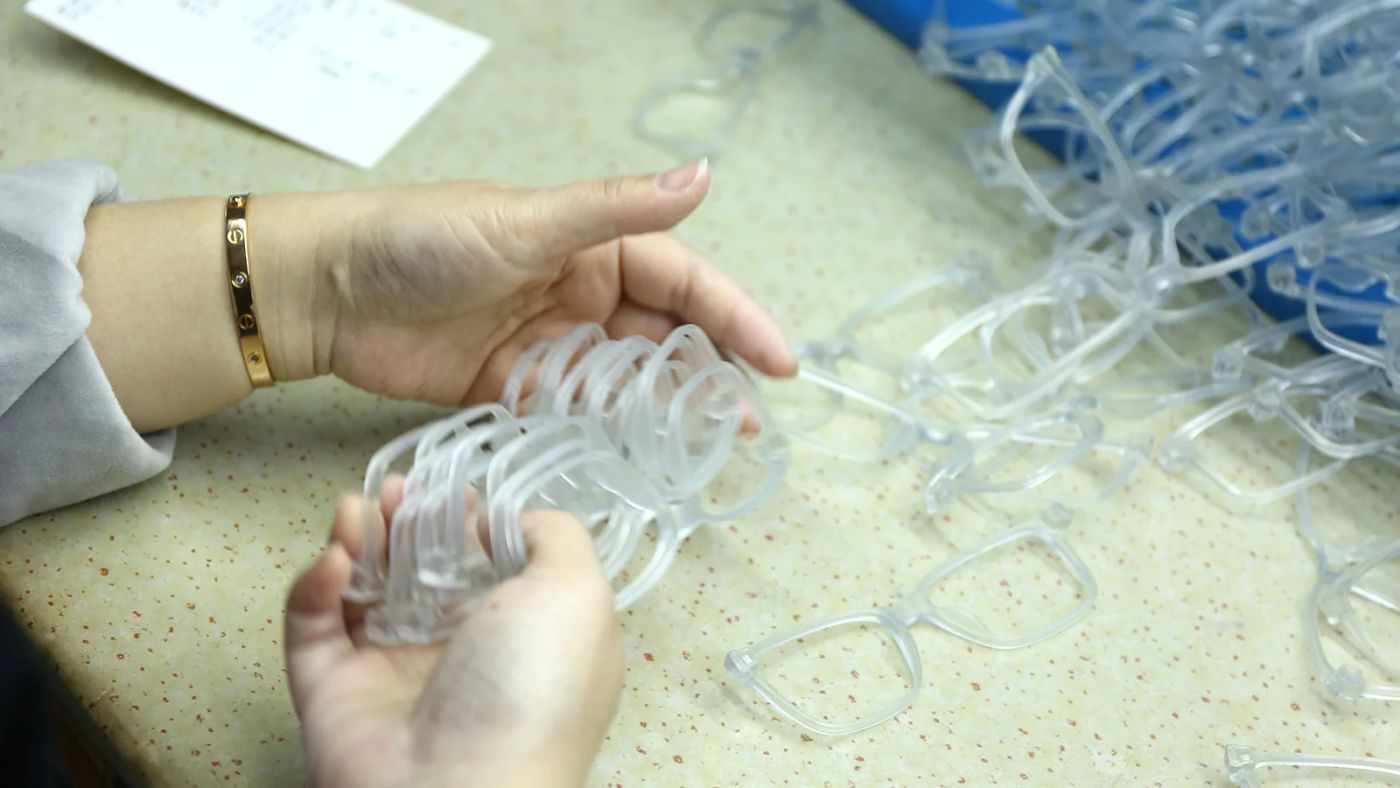
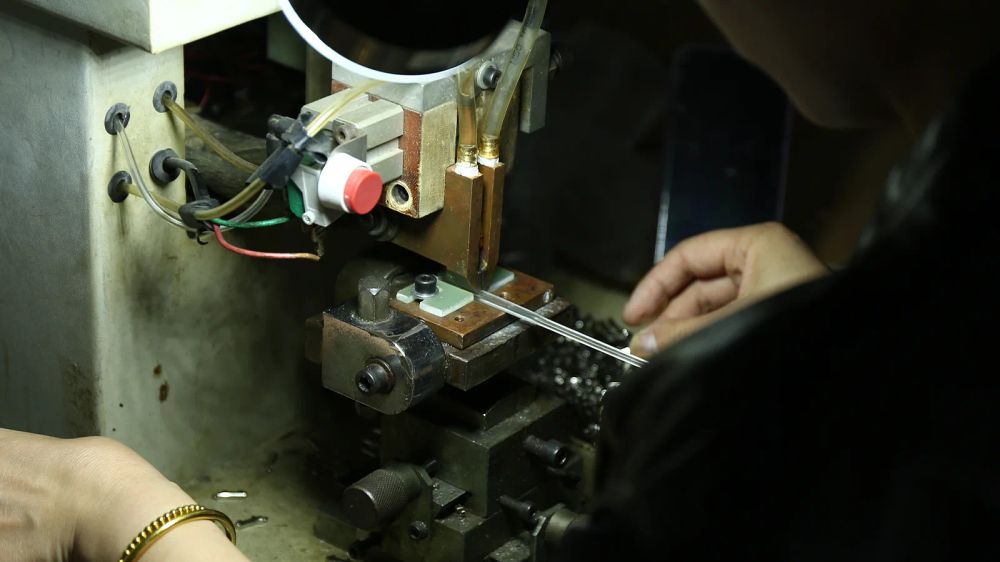
Factories need a minimum quantity because artwork preparation, color setup, component purchasing, machine adjustment, quality checks and packing all create work before the first sellable pair is completed. A new mold adds another development stage. Smaller orders spread these fixed activities across fewer units, so the lowest total order value and the lowest unit cost are rarely the same decision.
DOMI Custom Sunglasses MOQ by Production Route
DOMI uses three practical routes for early planning. These figures are reference starting points, not automatic promises for every style or quantity split. The selected product, colors, logo method, packaging and production setup still determine the final quotation.
| Production route | What is customized | Reference MOQ | Reference lead time |
|---|---|---|---|
| Ready-stock customization | Available style and color, with approved logo and packaging | From 100 pairs | About 5–10 calendar days |
| Semi-custom existing frame | Frame color, lens direction, logo method or position and packaging | From 300 pairs | About 20–30 calendar days |
| Full-custom development | New shape, structure or drawing requiring development and tooling | From 2,000 pairs | About 40–60 calendar days |
Reference lead times begin after DOMI receives the 30% deposit and exclude international shipping. Artwork, sampling, buyer approvals, packaging and project complexity can change the final schedule.
Why the Same Quantity Can Produce Different MOQs
A request for 300 pairs in one frame color and one logo is not the same production setup as 300 pairs divided across several colors, lenses or artwork versions. Each variation may require separate materials, machine setup, artwork alignment and inspection references. That is why buyers should ask whether the MOQ applies per order, per style, per color or per design.
The more variables that change, the more important it becomes to separate the total order quantity from the minimum quantity for each production setup. A supplier should confirm the split before the buyer treats several SKUs as one shared MOQ.
- Frame style or mold
- Frame material and color
- Lens color, finish or function
- Logo method, artwork and application position
- Packaging format and printed packaging artwork
- Quantity split by style, color and design
What ‘No Minimum’ and ‘Low MOQ’ Usually Mean
A no-minimum offer normally starts with finished inventory and allows only limited personalization. It does not usually include a new frame shape, new mold or unrestricted material and component changes. Print-on-demand or retail-personalization services may accept very small quantities because they are not setting up a dedicated factory production run for a new product.
For factory-direct sourcing, low MOQ custom sunglasses normally begin with a product that already exists. At DOMI, the ready-stock route starts from 100 pairs, subject to current stock, available colors, logo feasibility and packaging. When the buyer needs coordinated product changes, the project moves to semi-custom or full-custom development and the MOQ rises with the production work involved.
| Route | Product starting point | Typical control | Main limitation |
|---|---|---|---|
| Retail personalization or print on demand | Finished third-party inventory | Logo or simple surface personalization | Limited product and production control |
| DOMI ready-stock customization | Available DOMI style and color | Approved logo and packaging | Base product and stock availability are fixed |
| DOMI semi-custom route | Existing frame or mold | Coordinated colors, lenses, logo and packaging | Structural changes are limited by the existing platform |
| DOMI full-custom route | Buyer drawing, sample or new brief | Product development, tooling and full approval path | Higher MOQ, development cost and longer schedule |
Treat Packaging as a Separate MOQ Decision
The sunglasses and the packaging do not always share the same minimum quantity. A standard bag, pouch or available case may fit a smaller order, while a printed box, molded case or special insert can have its own material and printing minimum. Packaging can therefore become the real constraint even when the frame quantity is acceptable.
Include the packaging format, material, logo placement, colors, quantity per product and carton requirements in the first request for quotation. If the packaging minimum exceeds the sunglasses order, ask whether unprinted stock packaging or a simpler branded option can meet the launch requirement without leaving excess packaging inventory.
Match the Sample Plan to the MOQ Route
Sampling should confirm the decisions that can create loss in bulk production. For a ready-stock order, the buyer mainly needs to approve the product, available color, logo application and packaging. A semi-custom order normally adds a physical sample covering the coordinated product changes. Full-custom development may require drawing or 3D confirmation, a physical prototype, tooling and a molded trial sample before mass production.
The final approval should identify one current specification and one approved sample or reference. Color, lens direction, logo size and position, finish and packaging should not remain scattered across separate messages. Revisions are normal, but every revision changes the point from which the production schedule can be planned reliably.
| Route | Main sample or approval | What the buyer should confirm |
|---|---|---|
| Ready stock | Product sample or artwork reference | Available style, color, logo and packaging |
| Semi-custom | Physical customized sample | Product combination, colors, lens, logo method and packaging |
| Full custom | Drawing or 3D proposal, prototype, tooling route and molded sample | Shape, dimensions, structure, appearance and production-ready result |
Understand What the Lead Time Includes
A production lead time is useful only when its starting point and exclusions are clear. DOMI’s reference lead time begins when the 30% deposit is received and is counted in calendar days. International shipping is not included. Artwork confirmation, buyer revisions, packaging development and delayed sample approval can extend the overall project calendar.
Full-custom schedules are longer because product review, 3D or prototype confirmation, mold development and a molded sample happen before bulk production. Repeat orders can be shorter when the mold, materials, artwork and packaging remain unchanged, but availability and production scheduling must still be reconfirmed for each order.
- Quotation and deposit date
- Artwork and specification approval
- Sample production and buyer review
- Tooling and trial sample where required
- Bulk production, inspection and packing
- International freight and destination clearance
Reduce First-Order Risk Without Forcing an Unrealistic MOQ
MOQ negotiation works best when the buyer changes the production problem, not when the buyer only asks for a lower number. The strongest option is usually to start from an existing frame and reduce the number of unique setups. This lowers development work while preserving the branding elements that matter most for launch.
DOMI reviews the complete brief before confirming whether several colors or designs can share an order quantity. Buyers should not assume that different styles, colorways or logos automatically combine under one MOQ; the answer depends on whether they use the same product platform, materials and production setup.
- Choose an existing frame instead of opening a new mold.
- Use one frame color, lens direction and logo method for the first order.
- Reduce the number of artwork versions or logo positions.
- Use available components and standard packaging where practical.
- Separate launch essentials from later product-line extensions.
- Share a realistic repeat-order plan, without treating future volume as a guaranteed waiver.
Compare Total Project Cost, Not MOQ Alone
A lower MOQ reduces initial inventory, but it does not automatically create the lowest unit cost. Setup, artwork, sampling, tooling and inspection work are distributed across fewer pairs. On the other hand, ordering more than the sales plan can lock cash into stock, packaging and warehouse space. The right quantity balances production economics with realistic demand.
Ask suppliers to quote the same specification at relevant quantity levels and show which costs are one-time, which repeat with every design and which change on reorder. This gives the buyer a better basis for deciding whether a higher quantity genuinely improves the program or simply creates more inventory.
| Cost area | Questions to confirm |
|---|---|
| Product | Are frame, lens, components and finish identical across quotes? |
| Customization | Does every logo, color or position require a separate setup? |
| Sampling | Which sample is included and how are revisions handled? |
| Tooling | Is a new mold required, who pays for it and what are the refund conditions? |
| Packaging | Does the packaging have a separate MOQ or printing setup? |
| Inspection | What factory checks or third-party inspection are included? |
| Logistics | Are freight, duties, warehousing and destination clearance excluded? |
Plan Tooling and Reorders for Full-Custom Sunglasses
A new frame shape or structure requires more than a larger order. The buyer and factory must confirm the drawing, prototype or 3D proposal, mold route, molded sample and change responsibilities. Late structural revisions can affect both the mold cost and the delivery schedule, so the approved design should be stable before tooling begins.
For DOMI full-custom projects, the buyer pays the mold fee. DOMI’s current policy is to refund that fee after cumulative orders exceed 50,000 pairs. The quotation or agreement should still state the project-specific tooling scope, ownership or use conditions, revision responsibility and the specification used for future repeat orders.
Send an RFQ That Can Receive an Accurate MOQ
A useful request for quotation gives the factory enough information to identify the correct production route. If the product direction is still open, state which requirements are fixed and which can change to reach a practical first-order quantity.
- Product image, drawing, sample or preferred existing style
- Target quantity and split by style, color and logo design
- Frame material and required lens direction
- Vector logo artwork and preferred application position
- Packaging and carton requirements
- Destination market and required testing or documents
- Target sample date and final delivery date
- Expected repeat-order pattern, if known
FREQUENTLY ASKED QUESTIONS
Questions Buyers Often Ask
What is DOMI’s minimum order quantity for custom sunglasses?
DOMI’s current reference MOQ is from 100 pairs for ready-stock customization, from 300 pairs for semi-custom work using an existing frame and from 2,000 pairs for full-custom development. The final MOQ depends on the product, colors, logo, packaging and production setup.
Can I split the custom sunglasses MOQ across several colors or logos?
Sometimes, but it is not automatic. The factory must confirm whether the variants share the same frame, material, components and production setup. Ask for the minimum per style, color and design before finalizing the quantity split.
Do packaging and sunglasses have the same MOQ?
Not always. Printed boxes, cases, pouches or inserts may have their own material and printing minimums. Include packaging in the first RFQ so the factory can confirm whether it fits the sunglasses quantity or requires a simpler option.
Do low MOQ custom sunglasses cost more per pair?
They often do because setup, artwork, sampling, inspection and other fixed work are divided across fewer pairs. A lower MOQ can still be the better first-order decision when it reduces inventory risk and protects cash flow.
How long does a custom sunglasses order take at DOMI?
Reference lead times are about 5–10 calendar days for ready-stock customization, 20–30 days for semi-custom work and 40–60 days for full-custom development. Timing begins after the 30% deposit and excludes international shipping; approvals and project details can change the final schedule.
Can I order a completely new frame with a low MOQ?
A completely new frame requires development, tooling and trial-sample approval, so it does not use the ready-stock MOQ. DOMI’s current full-custom reference starts from 2,000 pairs. If the first-order quantity is lower, review an existing-frame semi-custom route first.
How can I reduce the MOQ for my first sunglasses order?
Start from an existing frame, reduce the number of colors and artwork versions, use an available lens direction and select practical packaging. DOMI can review the brief and identify which changes reduce production setups without losing the essential branding requirement.
PLANNING A SUNGLASSES PROJECT?